Neighbourhood Health Workers
Driving local implementation of the NHS Neighbourhood Model
The Neighbourhood Health Worker (NHW) is a flexible, ARRS-level healthcare professional, typically a Social Prescriber, Health Coach, Physiotherapist or similar, but dedicated to translating Neighbourhood priorities into practical, measurable action.
They operate as the on-the-ground catalyst for Neighbourhood Working: connecting practices, secondary care, councils, and community assets to deliver joined-up, population-focused care.
Purpose of the Role
To help Primary Care Networks and local systems move from concept to implementation by:
- Understanding and analysing local population needs through population health data and frontline intelligence.
- Coordinating and aligning activity across GP practices, ARRS teams, secondary care, councils, community and voluntary partners.
- Driving forward the Neighbourhood priorities identified by the PCN and ICS (e.g. frailty, mental health, inequalities).
- Turning strategy into action: ensuring plans don’t just sit on paper but are delivered in day-to-day practice.
Who Provides and Supports Them
We recruit, manage, train, and supervise each NHW as part of our established workforce model. The Neighbourhood, PCN or local system simply partners with us to deploy the role where it will have the most impact. This ensures consistency, governance, and high-quality delivery, while allowing local flexibility and customisation to suit.
Why This Model Works
- Dynamic and adaptable: can flex between data analytical, operational, and community engagement functions depending on local resources and needs.
- Rooted in real healthcare delivery: the worker is a fully supported specialist healthcare professional, not a generic “coordinator”.
- Locally tailored: aligned with the distinct needs and demographics of each Neighbourhood, rather than a one-size-fits-all model.
- System ready: designed in line with ICS and NHS England frameworks (Fuller Stocktake, Core20PLUS5, and the Long Term Plan).
What do Neighbourhood Health Workers actually do?
Identify Patient Populations and Local Need
Neighbourhood Health Workers (NHWs) lead on understanding who within the population most needs proactive, joined-up care.
For example:
- Analyse local population health data (from practice dashboards, PHM tools, Core20PLUS5 datasets, and localised intelligence).
- Identify priority cohorts — e.g. high-frequency attenders, frailty clusters, mental health and social isolation hotspots.
- Combine quantitative data (admissions, deprivation indices, long-term condition prevalence) with qualitative insight from frontline staff, ARRS teams and community partners.
- Produce clear, actionable summaries that guide where the PCN or Neighbourhood should focus effort first.
How We Support NHWs
We provide training sessions and joint working opportunities to share learning and strengthen multidisciplinary teams.
- We provide NHWs with specialist data training and ongoing supervision from senior clinicians and operational leads experienced in population health management.
- Our central team supports data access, analysis templates, and reporting tools, so a PCN or Neighbourhood doesn’t need to create these systems in-house.
- We ensure information governance compliance and alignment with NHS frameworks, providing colleagues with assurance that work is accurate and secure.
- NHWs are part of a broader managed service, meaning consistent quality, peer learning, and rapid adaptation to emerging national and local needs.
Value to Neighbourhood / PCN
- We provide training sessions and joint working opportunities to share learning and strengthen multidisciplinary teams.
- Enables the PCN to transition from anecdotal to data-driven decision-making.
- Creates a shared understanding of local priorities across practices and partners.
- Allows targeted resource deployment (e.g. ARRS roles, social prescribing, clinics) where it makes the most impact.
- Provides a foundation for Neighbourhood-level planning, evaluation, and funding bids aligned with ICS objectives.
Coordinate Resources, Partners, Pathways, Engagement
Neighbourhood Health Workers (NHWs) act as the connective tissue of the Neighbourhood, coordinating partners, aligning services, and ensuring that communication flows effectively between all stakeholders.
For example:
- Engage and bring together a wide range of partners - GP practices, ARRS teams, community nursing, social care, mental health, voluntary and faith groups.
- Chair and organise Neighbourhood MDTs and planning meetings, ensuring they are purposeful, well-prepared, and lead to actionable outcomes.
- Centralise communication across the Neighbourhood, establishing clear channels and reducing duplication.
- Facilitate understanding between partners by recognising each organisation’s pressures, priorities, and culture.
- Drive alignment around shared priorities and practical next steps, ensuring that decisions are made in a timely and inclusive manner.
- Involve the right people at the right time, avoiding unnecessary meetings and work, keeping activity focused and efficient.
How We Support NHWs
- We provide NHWs with structured supervision and leadership coaching, ensuring they can confidently chair multidisciplinary discussions and manage complex stakeholder dynamics.
- Our central coordination team supports with agenda templates, communication frameworks, and digital collaboration tools, creating a consistent and professional experience for all partners.
- We maintain governance and accountability structures so meetings have clear outcomes and follow-up, rather than becoming another administrative burden.
- NHWs benefit from peer learning across other Neighbourhoods, sharing what works in engagement and coordination.
Value to Neighbourhood / PCN
- Builds a cohesive and collaborative Neighbourhood identity, strengthening relationships between health, social care, and community partners.
- Reduces siloed working and duplication, freeing up time and resources across a locality.
- Creates a clear line of communication and accountability for the PCN within the wider system.
- Demonstrates visible leadership at the Neighbourhood level, reassuring the ICB and partners that the PCN is proactive, organised, and partnership-ready.
Creating & Implementing Neighbourhood Solutions
Neighbourhood Health Workers (NHWs) take population insights and turn them into practical, joined-up interventions that directly support the Neighbourhood’s agreed priorities.
For example:
- Design and deliver local projects that bring existing ARRS and community workforce together e.g. SPLWs, FCPs, pharmacists, and voluntary partners working on shared outcomes.
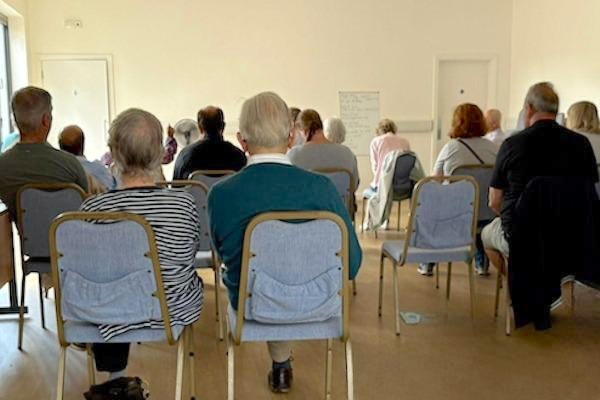
- Activate local assets (church halls, libraries, leisure centres, housing spaces) to host outreach clinics, wellbeing hubs, and prevention programmes.
- Coordinate bespoke Neighbourhood initiatives, adapting delivery models to suit different communities and population groups.
- Support workforce development, identifying training needs and opportunities for shared learning across practices and partners.
- Track and evaluate outcomes, providing feedback on data and impact to PCNs, ICBs, and community stakeholders.
How We Support NHWs
- We provide NHWs with access to project design frameworks, business-case templates, and governance oversight so that initiatives are safe, evidence-based, and measurable.
- Our senior team supports rapid mobilisation, handling HR, data protection, risk assessment, and evaluation reporting — freeing up PCN capacity.
- We link NHWs across multiple sites, sharing case studies and outcome dashboards, so Neighbourhoods can adopt proven models quickly (e.g. “Wellbeing Hubs”, “Active Neighbourhood Walks”, “Frequent Attender MDTs”).
- NHWs are trained in service design and behaviour-change approaches to ensure interventions are sustainable, not one-off.
Value to Neighbourhood / PCN
- Moves Neighbourhoods from planning to visible, measurable delivery, demonstrating mature processes and readiness for integrated funding.
- Optimises existing ARRS and community resource rather than creating new layers of staff at additional cost.
- Builds community trust and engagement by showing real activity at local level.
- Creates a portfolio of evidence and case studies for ICB reports, local authorities, and population health boards.
- Strengthens the PCN’s reputation as an innovative, solutions-focused partner within the ICS
Example of NHW-lead Neighbourhood Solutions
Models | Priority Population Group | Example NHW-Led Solution |
|---|---|---|
Deprived/Underserved areas | “Digital Inclusion Clinics” NHW partners with libraries and VCFSE to host drop-ins for patients to register for online services, NHS App, and health checks. | SPLWs, libraries, local authority digital team, volunteers |
People with multiple LTCs / frailty | “Proactive Frailty MDT” NHW coordinates virtual ward reviews, falls prevention classes, pharmacist reviews, and SPLW support for carers. | GPs, community nurses, pharmacists, physios, carers’ orgs |
People who need Mental Health support | “Wellbeing & Connection Programme” safe community spaces offering social prescribing, MH check-ins, creative groups. | MH teams, SPLWs, community connectors, VCFSE |
People at risk of avoidable admission | “Frequent Attender Pathway” NHW establishes a shared database and monthly MDT to case-manage high-utilisation patients. | PHM analysts, FCPs, care coordinators, community nursing |
Children & families in need | “Family Health Hub” school-based pop-up combining parental support, health coaching, and physio/OT advice. | Schools, health visitors, family hubs, youth workers |
Carers & socially isolated individuals | “Carers’ Café & Respite Network” NHW links SPLWs with local estate space, charities to host regular drop-ins, peer groups, and wellbeing checks. | SPLWs, Age UK, faith groups, voluntary sector |
People in transitional housing / homelessness / asylum | “Neighbourhood Outreach Pathway” NHW coordinates GP registration, MH support, and social prescribing outreach sessions. | Outreach teams, voluntary sector, housing officers |
Measuring, Improving & Demonstrating Impact
Neighbourhood Health Workers (NHWs) ensure that every activity and project is measurable, data-informed, and continually improving
For example:
- Collect and interpret data from multiple sources, practice dashboards, EMIS reports, SPLW logs, PHM tools, and community partner feedback.
- Develop simple outcome frameworks for Neighbourhood projects (e.g. attendance, wellbeing change, avoided appointments, reduced admissions).
- Embed feedback loops, gathering input from patients, staff, and partners to identify what’s working and what needs refining.
- Produce short, visually clear reports to share with PCNs, ICBs, and local authorities, ensuring transparency and shared learning.
- Champion and take responsibility for a culture of learning and improvement, turning every initiative into an opportunity to evolve the Neighbourhood model.
How We Support NHWs
- We provide NHWs with data templates, dashboards, and evaluation tools built around NHS metrics and Core20PLUS5 indicators.
- Our senior analytics and quality team review performance trends and help translate data into practical improvement plans.
- We handle reporting, governance and evidence collation, so the PCN can confidently demonstrate impact in ICB reviews and funding discussions.
- NHWs have access to a community of practice, sharing outcomes, case studies, and continuous improvement methods across other Neighbourhoods for wider learning.
- We coach NHWs in quality improvement methodology and population health evaluation so they can lead locally on evidence-based change.
Value to Neighbourhood / PCN
- Provides the PCN with credible, quantifiable evidence of delivery, essential for demonstrating value, securing funding, and influencing system priorities.
- Ensures every intervention contributes to measurable population health improvement, not just activity volume.
- Creates a continuous learning cycle, enabling rapid adaptation to changing community and localised needs.
- Builds accountability and trust with ICBs and partner organisations by showing consistent, clear outcomes and transparent governance.
- Positions the PCN as a data-literate, improvement-driven leader within its Integrated Neighbourhood.
Why Choose Us?
We’re not new to this; our team already provides ARRS workforce solutions to over 250 GP practices across multiple PCNs and Neighbourhoods. We’ve seen first-hand what works, what doesn’t, and how every PCN/Neighbourhood has its own character, challenges, and working culture.
Through this experience, one thing has become clear: a one-size-fits-all model never truly fits. PCNs and Neighbourhoods succeed when solutions are dynamic, locally shaped, and people-led - which is exactly how we operate.
Our workforce model was tested and proven during the COVID-19 pandemic, when we had to adapt rapidly to changing demand, redeploy roles across sites, and maintain continuity for patients and practices under immense pressure. That period taught us the value of a multi-purpose, agile workforce, professionals who can step up and cross boundaries to deliver wherever the need arises.
We also take pride in being approachable, responsive, and grounded. From senior leadership to frontline teams, we believe in getting real work done, solving problems, not just discussing them. Our partners tell us they value our can-do attitude, our honesty, and our ability to turn plans into practical action that makes life easier for both staff and patients in PCNs and Neighbourhoods.
If you’re looking for a partner who understands local healthcare working from the inside out, and who can help you make Neighbourhood Working a living, functioning reality, we’re ready to help.
Get More Info
If you're interested in exploring the support we may be able to offer, or if you’re a professional and want to work with us to support your workforce requirements, please feel free to get in touch.